Routines
You Still Smoke in the Car With the Window Cracked
Why the car can become the last smoking place, and how to change the ritual without losing the privacy, quiet and alone time it gives you.
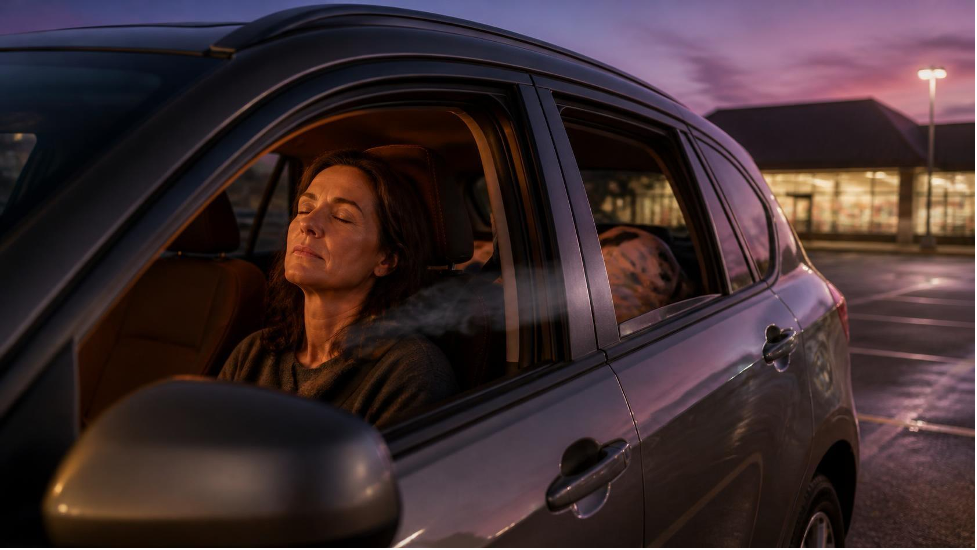
Denise has smoked in her car for twenty-two years.
Window down two inches. Elbow on the door. Radio low. Every drive to work. Every drive home. Every time she sits in a parking lot for a few minutes before going into the grocery store.
She doesn't smoke in the house anymore. She stopped when her son was born. She doesn't smoke at work, because there's nowhere to go. And she doesn't smoke in front of her friends, most of whom quit years ago.
But the car is different. The car is hers.
Why the car becomes the last place
If you smoke in your car, you might recognize this. Over the years, as smoking became less acceptable in more places, the car became one of the few spaces left.
It's private. It's yours. Nobody is asking you for anything. You can sit in silence or listen to whatever you want. For many people, it's the only fifteen minutes of the day that belong to them.
So the cigarette in the car isn't just a cigarette. It's privacy, quiet, and a small escape.
When she noticed
One Saturday, Denise's son Tyler, who had just turned seventeen, borrowed the car for the first time.
When he came back, he handed her the keys and said, half joking, "Mom, your car smells like an ashtray. Like, really bad."
She laughed it off. But later, sitting in the driver's seat, she noticed it too. The smell in the upholstery. The faint yellow film on the inside of the windshield. The lighter in the cup holder and the empty pack in the door pocket.
She had stopped noticing all of it years ago.
Why the car is so hard to change
Denise had tried to quit before. Each time, the car was where it ended.
It made sense once she thought about it. Driving is full of cues: getting in, starting the engine, pulling out of the driveway, stopping at red lights, waiting in parking lots. Each one had become linked to lighting up.
And the car was also where she went to be alone. Taking away the cigarette felt like taking away the one place she could breathe.
A different approach
This time, Denise didn't start by trying to stop everywhere at once. She started with the car.
She had it cleaned inside, properly, for the first time in years. She took the lighter out and left it at home. She moved the cigarettes to the trunk, so reaching for one would mean pulling over and getting out.
Then she gave the car a new ritual. A specific playlist for the morning drive. A short guided audio for the drive home. Some days she just drove in silence with the window down, the way she used to, but without the cigarette.
The first two weeks felt strange. She kept reaching toward the cup holder at red lights. She had a few hard days, especially after long shifts. But the car started to feel different. Still hers. Still quiet. Just not smoky.
If your car is your smoking place
1. Notice what the car gives you. Privacy, quiet, alone time, a buffer between work and home?
2. Keep those things. The goal isn't to make your car less yours.
3. Add friction. Keep cigarettes in the trunk or out of the car entirely. Remove the lighter.
4. Clean it. A fresh-smelling car can make the old habit feel less automatic.
5. Give the drive a new ritual. Music, audio, a favorite podcast, or a short guided session after you park.
6. Plan for red lights and parking lots. These short waits are often the strongest cues.
7. Expect it to feel odd at first. New routines feel unnatural before they feel normal.
A few months later
Tyler borrows the car again. When he gets back, he doesn't say anything about the smell.
Denise notices that he doesn't. And for some reason, that small silence means more to her than any compliment.
Reset helps you build new rituals for specific moments, like your drive, and gives you a craving tool you can use as soon as you've parked, before the old routine takes over.