Habits
You Can Go Eight Hours on a Flight Without One. So Why Not at Home?
If you can go hours without smoking on a plane, why does it feel impossible at home? The answer says a lot about how your habit really works.
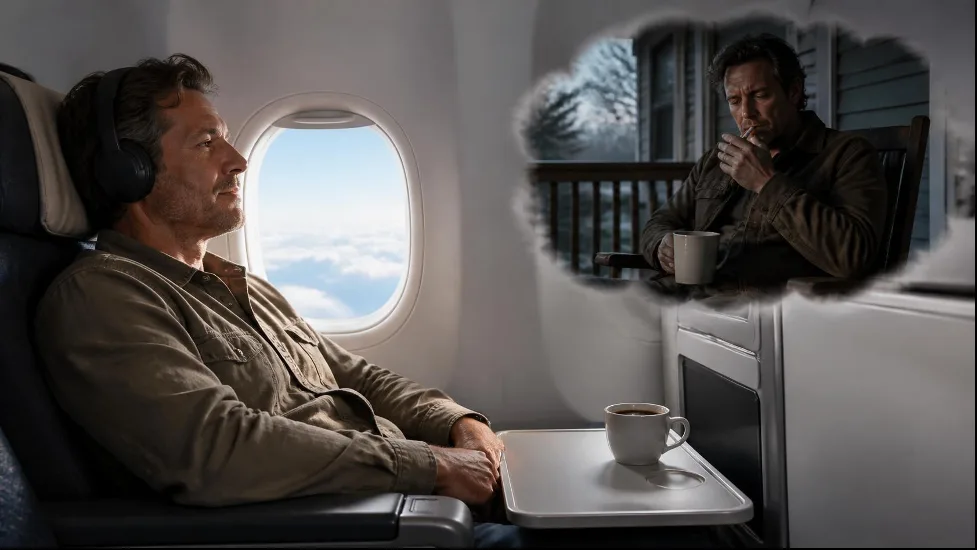
You board a long flight. Eight, ten, maybe twelve hours without a cigarette.
And somehow, it's fine. You read, watch movies, sleep, eat the strange airplane meal. You might think about smoking once or twice, but it doesn't take over.
Then you get home, pour a coffee, and within minutes, you're reaching for a cigarette.
If you can go so long without smoking on a plane, why does it feel impossible at home?
What's different on a flight
On a plane, several things change at once:
You can't smoke. There's no option, so there's no decision to make.
Your routines are interrupted. No kitchen, no porch, no car, no usual break.
Your surroundings are new. The cues that normally trigger smoking aren't there.
You're occupied. Movies, food, sleep, and travel logistics fill the time.
Many smokers notice that cravings feel weaker when smoking simply isn't possible.
Why your brain adjusts when smoking isn't an option
When smoking is clearly off the table, many people find that the urge doesn't build in the same way. The mind may stop expecting a cigarette.
At home, the opposite is true. Cigarettes are available. The usual routines are there. Every familiar cue reminds you that smoking is possible.
The physical side of nicotine dependence is still real, and long flights can be uncomfortable for some smokers. But the environment changes how strongly many people feel it.
Why home feels so much harder
Home is full of smoking cues:
Familiar places: the porch, the garage, the back door.
Familiar times: after meals, with coffee, before bed.
Familiar objects: lighters, ashtrays, packs.
Familiar feelings: stress, boredom, relaxation.
Familiar people: friends or family who smoke.
Each cue is a reminder of the habit. Together, they make smoking feel automatic.
What this tells you about your habit
If you can manage long flights without smoking, that's useful information. It suggests that:
You're capable of going long periods without cigarettes.
Your environment plays a big role in your cravings.
Changing your surroundings and routines may make quitting easier.
In other words, it may not be that you can't go without smoking. It may be that home makes smoking feel expected.
How to bring "flight mode" home
You can't turn your house into an airplane, but you can borrow some of what makes flights easier.
Remove access. Keep cigarettes out of the house, car, and bag.
Change your setting. Rearrange where you drink coffee, take breaks, or relax.
Interrupt routines. Change the order of your morning or evening.
Stay occupied. Plan activities for times you usually smoke.
Create a "no smoking zone" mindset. Treat certain places as off-limits, just like on a plane.
Use travel as a fresh start. Some people choose to begin quitting after a trip, when routines are already disrupted.
Does this mean nicotine isn't the problem?
No. Nicotine dependence is real. But routines and environment can strongly affect how intense cravings feel.
Why do I crave a cigarette as soon as I land?
Arrival often brings back smoking cues: being outside, waiting, travel stress, or finally having the option to smoke.
Can I use this to help me quit?
Yes. Understanding which environments make cravings stronger can help you plan where and how to make changes.
What if I still have strong cravings at home?
That's normal. If withdrawal symptoms are severe, talk to a doctor or pharmacist about the options available.
Reset helps you see which places and routines trigger your strongest cravings, and build new habits around them, so home can start feeling a bit more like the flight.