Routines
Day 3, Day 10, Day 30: How Your Daily Routine Changes as You Quit
Quitting smoking is a series of small changes that show up in your day as you go. A rough guide to what may come up at each stage, from day 1 to day 30, and one thing to try at each point.
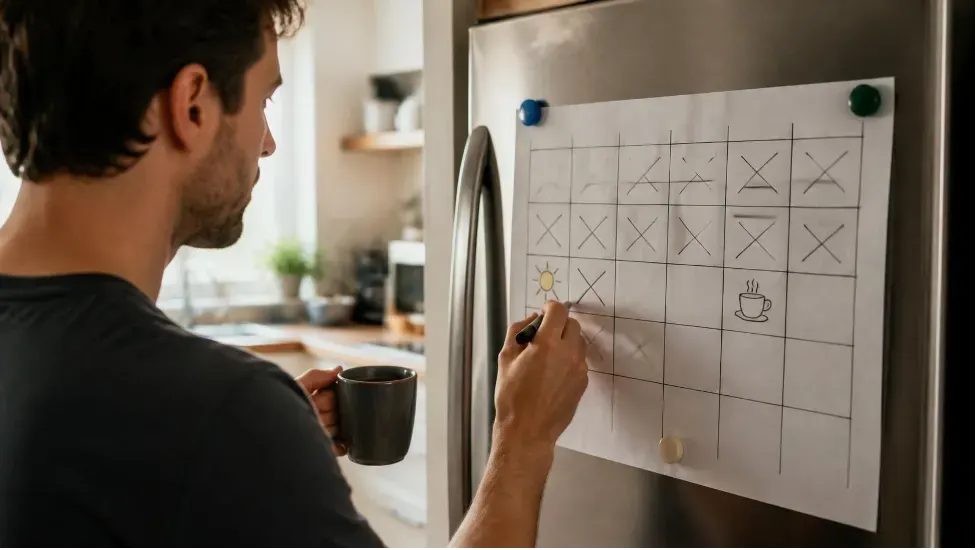
Quitting smoking isn't just one decision. It's a series of small changes that show up in your day as you go.
The first few days often feel very different from the first few weeks. Some routines are hard at the start and easier later. Others stay difficult longer than you expect.
Everyone's experience is different, but many people notice certain patterns in how their daily routines change. Here's a rough guide to what may come up, and one thing to try at each stage.
If you have questions about physical withdrawal symptoms at any point, speak to a doctor or pharmacist.
Day 1: The day of noticing
You may be surprised by how often your hands reach for cigarettes. Coffee, the car, after meals, breaks: suddenly every routine feels like a reminder.
Try this: don't aim for perfection. Simply notice when the urge appears and what's happening at the time.
Day 3: The day routines feel strange
By now, you may feel how much of your day was built around smoking. The morning feels different. Breaks feel empty. The evening seems longer.
Try this: keep the routines, change what happens in them. Take your break, but without the cigarette.
Day 5: The day the hardest moments become clear
Patterns usually start to show. Maybe it's the first coffee. Maybe it's the drive home. Maybe it's after dinner.
Try this: pick your two or three toughest moments and make a specific plan for each.
Day 7: The day of the first weekend
For many people, the first weekend brings new challenges: alcohol, social situations, free time.
Try this: plan the weekend before it starts. Decide what you'll do if someone offers you a cigarette.
Day 10: The day new routines start to form
Some moments may already feel a little easier. Others may still feel difficult. You may notice that new habits, like a walk, a drink of water, or a short session, are becoming more familiar.
Try this: reinforce what's working. Repeat the replacements that help.
Day 14: The day of unexpected cravings
Just when things feel easier, a craving may appear out of nowhere. A song, a smell, a stressful moment, or a situation you haven't faced since quitting.
Try this: keep your craving plan handy, even if you think you no longer need it.
Day 21: The day of tested routines
By now, you've probably faced many of your usual triggers. You've learned which strategies work best and which ones don't.
Try this: review your notes. Adjust your plan for the situations that are still difficult.
Day 30: The day of a new normal
At a month, many people find that some routines feel different. Mornings, breaks, or evenings may have a new rhythm. Some cravings may still appear, especially in stressful or social situations.
Try this: celebrate your progress, and keep planning for the moments that still matter.
What if your experience is different?
That's normal. Some people find the first few days hardest. Others find week two or three more challenging. Some move steadily forward. Others slip and start again.
What matters is learning from each stage, not matching a timeline.
A simple daily check-in
At the end of each day, ask yourself:
1. When did I feel the strongest urge?
2. What was happening?
3. What helped?
4. What will I try tomorrow?
Reset's daily check-ins and tracking help you see how your routines change from week to week, so you can spot what's getting easier and where you still need a plan.